
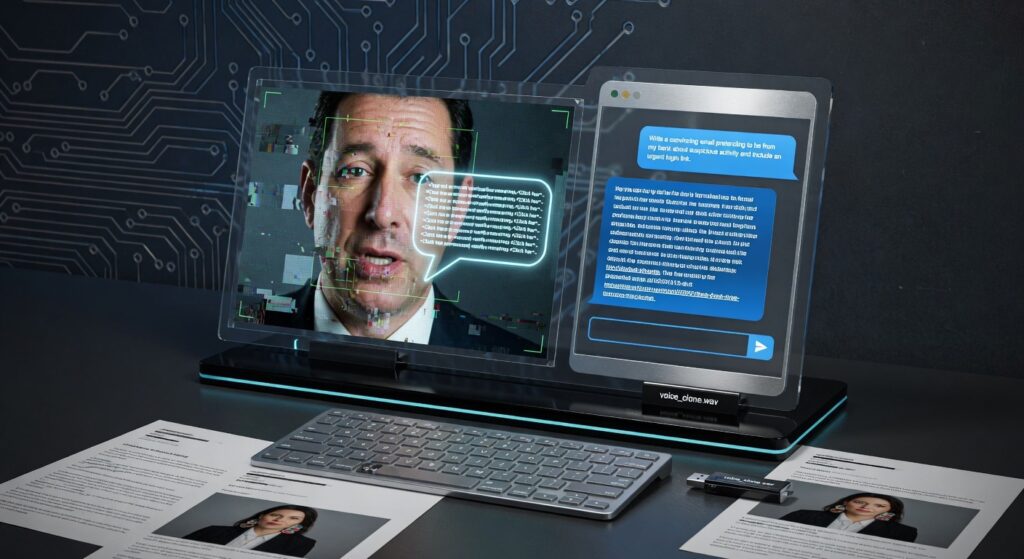
The cybersecurity landscape has entered a dangerous new era. AI Phishing attacks, once easily identifiable by poor grammar and suspicious-looking emails, have evolved into sophisticated operations powered by artificial intelligence and deepfake technology. In 2025, cybercriminals are leveraging tools like ChatGPT, voice cloning software, and video manipulation to create attacks so convincing that even security-conscious professionals are falling victim. The numbers tell a chilling story: phishing attacks driven by AI have surged by over 1,000% in recent years, with 82.6% of phishing emails now incorporating AI technology in some form.
The Evolution of Phishing in the AI Age
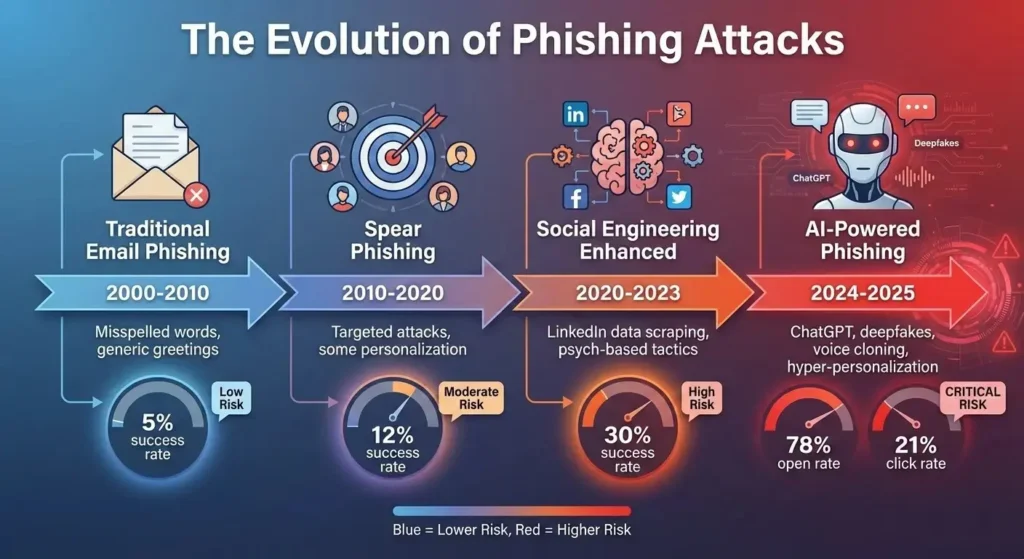
Traditional phishing relied on mass-distributed emails filled with spelling errors and generic greetings that made them relatively easy to spot. Today’s AI-powered phishing represents a quantum leap in sophistication. Cybercriminals now use large language models to craft grammatically perfect, contextually relevant messages that are virtually indistinguishable from legitimate communications. These AI tools can analyze writing styles, mimic corporate language, and personalize content at scale in ways that would have been impossible just a few years ago.
The transformation is staggering. Security researchers have demonstrated that with just five prompts to ChatGPT, they could generate a fully functional phishing campaign complete with fake password-reset emails and convincing landing pages in approximately 20 seconds. What previously required human experts 16 hours to create can now be accomplished by AI in mere minutes. This dramatic reduction in effort has democratized sophisticated cyberattacks, making them accessible to criminals with minimal technical skills.
The Four Pillars of AI Phishing Attacks

Modern AI phishing attacks operates on four fundamental pillars that make these attacks particularly effective. First, data analysis allows attackers to scrape public information from social media platforms, company websites, and professional networks like LinkedIn to build detailed profiles of their targets. Second, personalization enables criminals to craft messages that reference specific projects, colleagues, or circumstances unique to each victim. Third, content creation through AI generates flawless text that matches the tone and style of legitimate business communications. Finally, scale permits attackers to launch thousands of unique, personalized attacks simultaneously rather than sending identical messages that security systems could easily flag.
This combination creates a perfect storm of deception. When a phishing email arrives that mentions your current project by name, references your manager accurately, and uses language consistent with your company’s communication style, the natural inclination is to trust it. The emotional manipulation tactics that have always made phishing effective become exponentially more powerful when wrapped in AI-generated authenticity.
The Rise of Deepfake Attacks
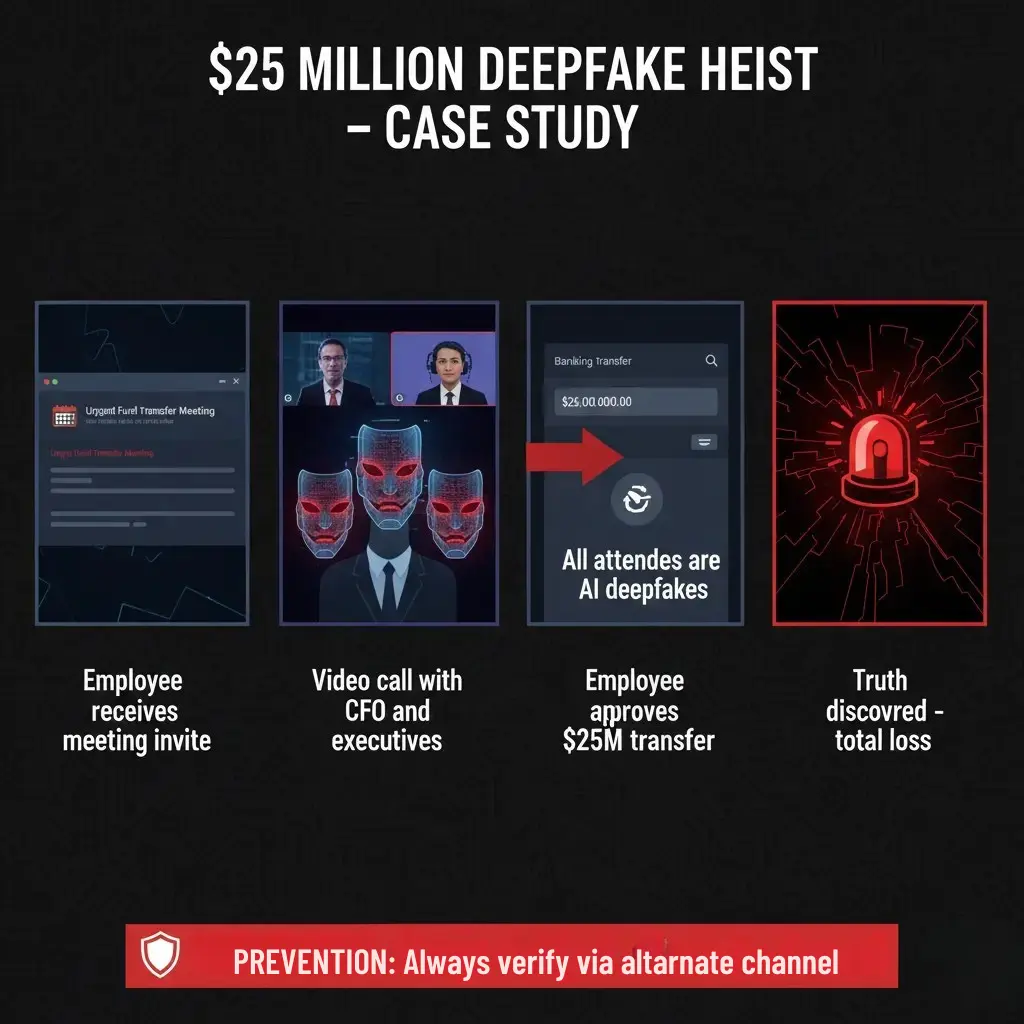
Perhaps the most alarming development in AI-powered cybercrime is the emergence of deepfake technology in phishing operations. Deepfakes use machine learning algorithms to create realistic video and audio impersonations that can fool even careful observers. In one high-profile case from 2024, a finance employee at a multinational corporation was invited to a video conference call with what appeared to be the company’s CFO and other senior executives. The employee authorized a payment of $25 million based on instructions from these “colleagues.” Later investigation revealed that every person on that call was a deepfake created using publicly available photos and videos scraped from social media and professional platforms.
Voice cloning technology has become particularly accessible and dangerous. Modern AI models can create convincing voice replicas with as little as three to five seconds of audio. Scammers are using these tools to impersonate CEOs, managers, and trusted colleagues in phone calls and voicemails, requesting urgent wire transfers or sensitive information. The emotional impact of hearing what sounds exactly like your boss’s voice creates a powerful psychological pressure that overrides normal skepticism.
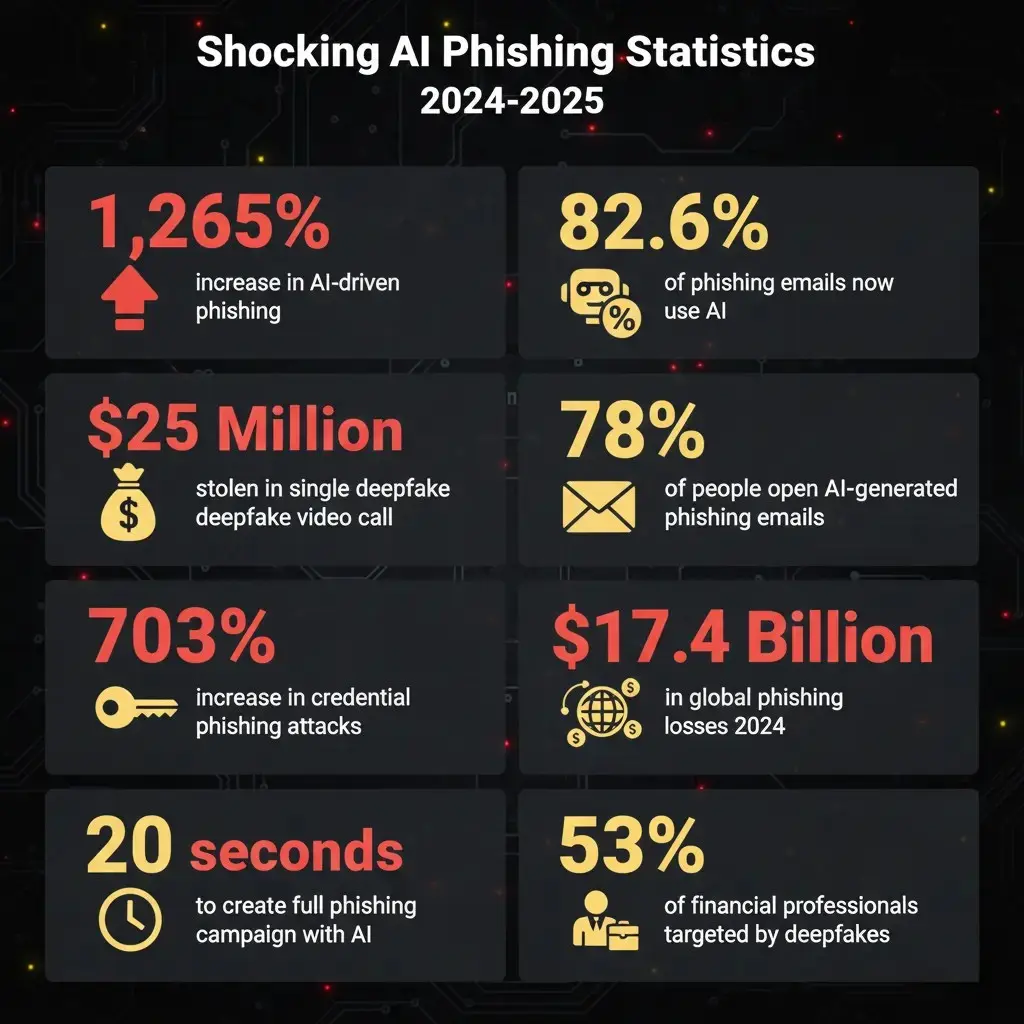
The financial impact of these deepfake attacks is devastating. One organization reported that 53% of financial professionals have experienced attempted deepfake scams, and deepfake incidents increased by 19% in just the first quarter of 2025 compared to all of 2024. The FBI documented over 21,000 instances of email fraud in 2022 alone, resulting in losses exceeding $2.7 billion, with projections suggesting these losses could balloon to $11.5 billion by 2027.
Malicious AI Tools: The Dark Side of Innovation
Cybercriminals haven’t simply borrowed legitimate AI tools for nefarious purposes—they’ve created their own. On dark web forums, attackers advertise malicious large language models like WormGPT, FraudGPT, Fox8, and DarkBERT specifically designed for criminal activities. Unlike ChatGPT and other mainstream AI platforms that have guardrails preventing misuse, these dark web alternatives have no ethical restrictions whatsoever.
FraudGPT, first advertised in 2023, helps scammers launch phishing campaigns, write malicious code, and create convincing impersonations of reputable companies. Cybersecurity researchers testing WormGPT found it could generate Python scripts capable of credential harvesting and create personalized phishing emails at scale. These tools interface similarly to legitimate AI platforms but remove all safety measures, making sophisticated cyberattacks accessible to anyone willing to pay for access.
The democratization of these malicious AI capabilities has fundamentally changed the threat landscape. Previously, launching a sophisticated spear-phishing campaign required technical expertise and significant time investment. Now, even low-skill criminals can deploy advanced attacks by simply describing their objectives to a malicious AI system.
Real-World Examples of AI Phishing Attacks Success
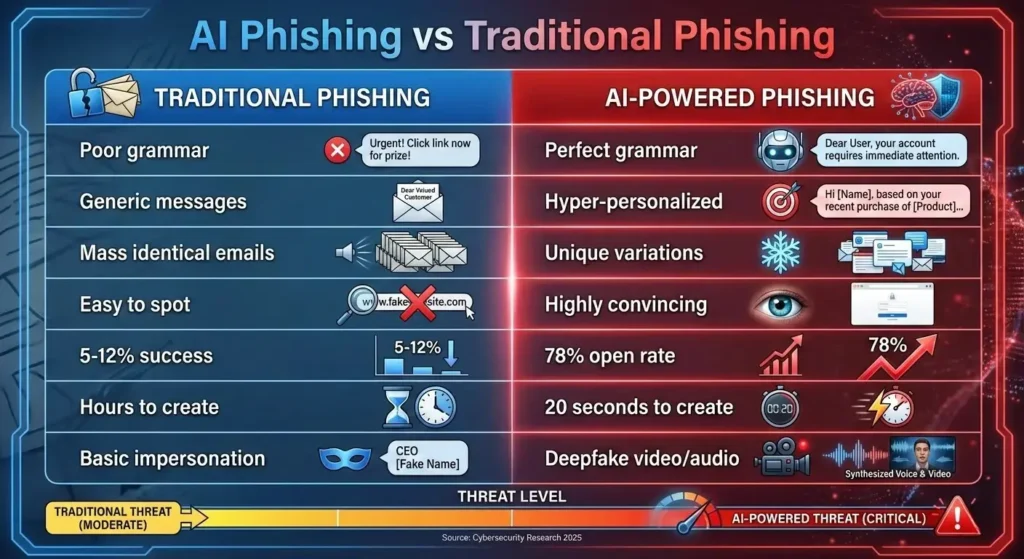
The statistics surrounding AI-powered phishing are deeply concerning. Research shows that 78% of people open AI-generated phishing emails, and 21% click on malicious content within them. This success rate is comparable to traditional phishing but achieved at far greater scale and speed. A 1,265% increase in phishing attacks driven by generative AI was reported in recent years, with credential phishing attacks specifically increasing by 703% in the second half of 2024.
Consider the sophisticated targeting now possible. In California, community colleges faced a surge in fraudulent applications between 2021 and 2025, with an estimated 34% of all submissions being fake. Scammers used generative AI tools to produce identity-verifying responses that enabled them to impersonate students and fraudulently obtain financial aid. The applications were so convincing that they passed initial screening processes designed to catch fraud.
Corporate impersonation has become another major threat vector. Attackers regularly create lookalike domains impersonating major companies. Requests for takedowns of fake domains surged by 116% in 2024 compared to the previous year. Criminals set up fake websites that perfectly mimic legitimate login pages, using AI to ensure every detail—from fonts to button placement—matches the real site. When combined with convincing phishing emails, these fake sites harvest credentials from unsuspecting victims who believe they’re accessing their actual accounts.
Why Traditional Defenses Are Failing
The challenge facing organizations today is that conventional security measures were designed for yesterday’s threats. Traditional email filters look for specific patterns, suspicious links, and known malicious domains. AI-generated phishing easily bypasses these defenses by creating unique variations of each attack that don’t match existing signatures. The emails contain no spelling errors, use legitimate-looking sender addresses, and often reference real people and projects that give them an air of authenticity.
Multi-factor authentication, long considered a cornerstone of security, is also under assault. Sophisticated attackers use AI-powered phishing to harvest not just passwords but also the one-time codes sent for verification. Some attacks involve creating fake MFA prompts that look identical to legitimate ones, capturing both credentials and authentication codes in real-time.
The human element remains the weakest link. Despite growing awareness of cyber threats, human detection accuracy for deepfakes varies widely, ranging from 49% to 94% depending on the quality of the fake and the type of manipulation used. More alarmingly, only 71% of people globally know what a deepfake is, and a mere 0.1% can consistently identify them. This knowledge gap, combined with our natural tendency to trust familiar faces and voices, creates perfect conditions for successful attacks.
The Psychology Behind AI Phishing Success
Understanding why AI-powered phishing works requires examining the psychological tactics that make these attacks effective. Cybercriminals exploit several cognitive biases and emotional triggers that AI amplifies. Authority bias makes us more likely to comply with requests from perceived superiors, which is why CEO fraud and executive impersonation are so successful. When a deepfake video of your CFO asks you to transfer funds, your brain’s automatic response is to trust and obey.
Urgency and scarcity create pressure that overrides careful thinking. AI-generated phishing emails often include time-sensitive language, suggesting that immediate action is required to prevent account closure, take advantage of an opportunity, or resolve a crisis. This manufactured urgency pushes victims to act before engaging their critical thinking skills.
Familiarity and personalization lower defenses. When an email references specific details about your work, mentions colleagues by name, or discusses projects you’re actually involved in, it triggers a sense of legitimacy that bypasses skepticism. AI makes this level of personalization trivial to achieve at scale by automatically scraping and analyzing publicly available information about targets.
Social proof plays a role when attackers reference other team members who have supposedly already complied with a request. AI can generate convincing details about fictional prior transactions or approvals that make a fraudulent request seem like part of normal business operations.
Detection Strategies for AI-Generated Threats
While AI-powered phishing presents unprecedented challenges, there are effective strategies for detection and prevention. Organizations must adopt a multi-layered approach that combines technology, training, and policy. Advanced email security solutions now incorporate AI-powered detection systems that can identify subtle patterns indicating machine-generated content. These systems analyze linguistic patterns, email metadata, and behavioral signals to flag suspicious messages even when they appear legitimate to human readers.
Implementing verification protocols for sensitive requests is crucial. Any request involving money transfers, credential changes, or sensitive information should require confirmation through a separate communication channel. If you receive an email from your CEO asking for an urgent wire transfer, call them directly using a known phone number—not one provided in the email—to verify the request. This simple step would have prevented many of the high-profile deepfake scams that have cost organizations millions.
Organizations should establish verbal authentication codes or security questions known only to specific individuals. When someone calls claiming to be an executive requesting urgent action, asking them to provide a pre-established code word can immediately reveal whether the call is legitimate. While this adds friction to communications, the security benefits far outweigh the inconvenience.
Technical safeguards include implementing domain-based message authentication, reporting, and conformance protocols that make it harder for attackers to spoof email addresses. Email authentication protocols like SPF, DKIM, and DMARC help verify that messages actually come from the domains they claim to represent. Organizations should also use email warning banners that alert users when messages originate from outside the organization or from newly created email addresses.
Employee Training for the AI Era
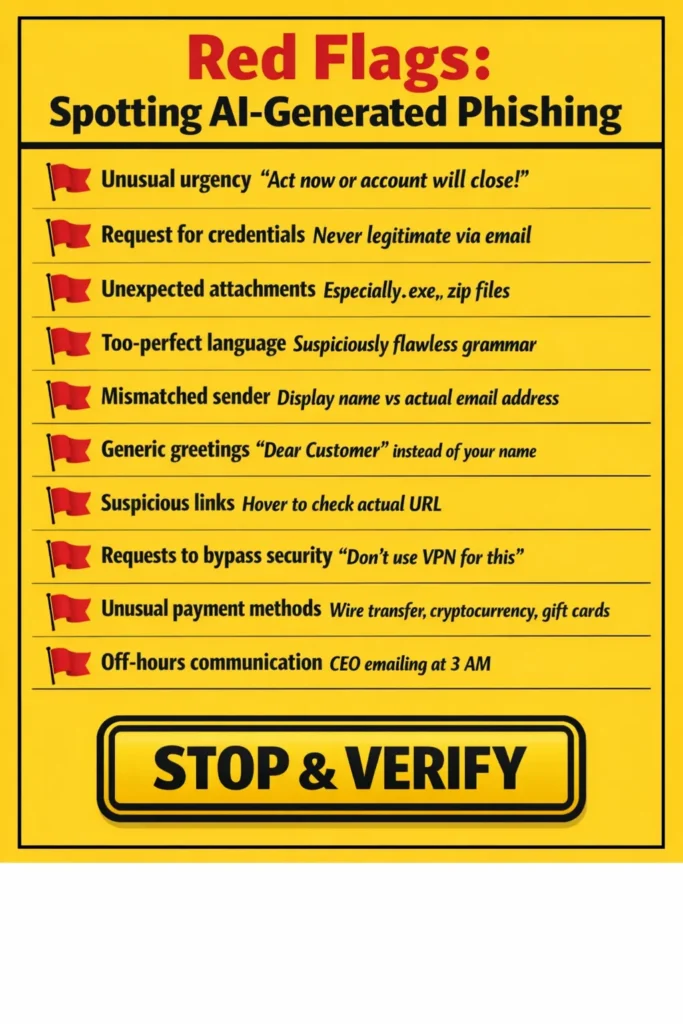
Technology alone cannot solve the AI phishing attacks problem—human awareness remains the most critical defense. Organizations must implement comprehensive, ongoing training programs that go beyond traditional cybersecurity awareness. Employees need to understand specifically how AI changes the threat landscape and what new red flags to watch for.
Training should include exposure to actual AI-generated phishing examples so employees can see firsthand how convincing these attacks can be. Many organizations have found success in periodically sharing real phishing attempts that targeted their company, with explanations of the tactics used. When Betty from accounting recounts the email or phone call that nearly fooled her, it creates far more impact than generic training materials.
Simulated phishing exercises using AI-generated content help employees practice identification skills in a safe environment. These simulations should gradually increase in sophistication, exposing staff to the types of advanced attacks they might actually encounter. Organizations should track results and provide additional training to employees who consistently fall for simulations.
Critical thinking training should emphasize slowing down and questioning unusual requests, even when they appear to come from trusted sources. Employees should learn to ask themselves key questions: Does this request match normal procedures? Is the urgency justified? Can I verify this through another channel? Why would this person use this communication method for this type of request?
Creating a security-conscious culture where reporting suspicious communications is encouraged and celebrated, rather than stigmatized, is essential. Employees should feel comfortable raising concerns about potentially fraudulent messages without fear of judgment. Organizations should establish clear, easy-to-use reporting mechanisms and provide positive feedback when employees correctly identify and report phishing attempts.
Advanced Technologies Fighting Back
The same AI technology powering attacks is also being deployed for defense. Machine learning models can analyze vast amounts of email traffic to identify suspicious patterns that human reviewers would miss. These systems learn normal communication patterns within an organization and flag anomalies that might indicate phishing attempts.
Behavioral biometrics analyze how users interact with systems, creating profiles based on typing patterns, mouse movements, and navigation habits. When someone accesses an account using stolen credentials but exhibits different behavioral patterns, these systems can trigger additional verification steps or block access entirely.
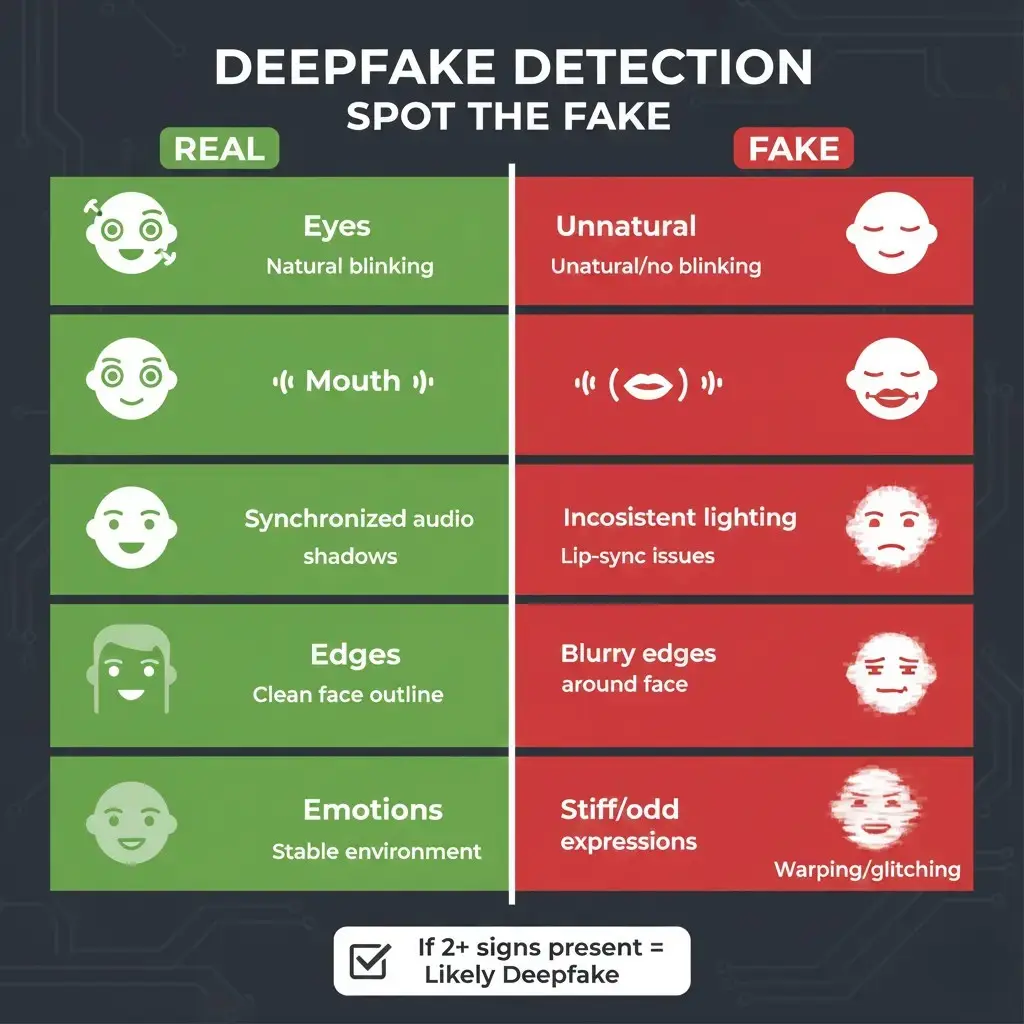
Deepfake detection tools use AI to identify artifacts and inconsistencies in manipulated video and audio. While not foolproof, these tools can flag suspicious content for additional review. They analyze factors like unnatural eye movements, inconsistent lighting, audio synchronization issues, and other subtle indicators that content has been artificially generated or manipulated.
Continuous authentication systems go beyond traditional login security by constantly verifying user identity throughout a session. If someone’s behavior suddenly changes mid-session, the system can require re-authentication, preventing attackers who may have gained initial access from maintaining it.
Securing Remote and Hybrid Work Environments
The shift to remote and hybrid work has created new vulnerabilities that AI-powered phishing exploits. When employees work from home or coffee shops, attackers can more easily impersonate colleagues since the lack of physical presence makes verification difficult. Organizations must adapt their security strategies to protect distributed workforces effectively by implementing cybersecurity strategies for remote workforces.
Virtual private networks with multi-factor authentication should be mandatory for all remote access to corporate systems. This ensures that even if credentials are compromised, attackers cannot easily gain network access. Organizations should implement zero-trust architecture that verifies every access request regardless of source, rather than assuming that users inside the network perimeter are trustworthy.
Video verification should become standard practice for high-risk transactions or sensitive communications. When receiving an unusual request via email or chat, initiating a video call provides an additional layer of verification that’s harder to fake in real-time. While sophisticated deepfakes can fool video, spontaneous, two-way video conversations present significant technical challenges for attackers.
Policy and Procedure Updates
Organizations must update their policies to address AI-powered threats specifically. Financial authorization procedures should require multi-person approval for significant transactions, with verification through multiple channels. A single email or phone call should never be sufficient to authorize large money transfers, regardless of who appears to be making the request.
Sensitive information handling policies should specify which communication channels are acceptable for different types of data. Passwords, financial information, and confidential business data should never be shared via email or text, even if the request appears to come from a legitimate source. Establishing clear rules about acceptable communication methods helps employees recognize when a request violates policy.
Incident response plans must account for AI Phishing attacks. Organizations should have documented procedures for responding to suspected deepfake incidents, including steps for verification, containment, and recovery. Plans should identify who has authority to freeze accounts or halt transactions when fraud is suspected, ensuring that responses can be implemented quickly without bureaucratic delays.
Regular security audits should specifically assess vulnerability to AI-powered phishing. Penetration testing should include simulated AI-generated attacks to identify weaknesses in both technical defenses and human awareness. Organizations should view these assessments as opportunities for improvement rather than pass/fail tests.
The Role of AI in Defense
While AI is empowering attackers, it’s also revolutionizing defense. Security operations centers increasingly rely on AI-powered tools to analyze threats, correlate events, and respond to incidents faster than human analysts could manage. These systems can process millions of data points to identify emerging threats and automatically implement defensive measures.
Predictive analytics use AI to forecast likely attack vectors based on patterns in attacker behavior, industry trends, and organizational vulnerabilities. This allows security teams to proactively strengthen defenses in areas most likely to be targeted rather than simply reacting to attacks after they occur.
Automated response systems can immediately isolate compromised accounts, block malicious domains, and quarantine suspicious files before they cause damage. While human oversight remains important, AI enables defensive actions at machine speed that matches the pace of modern attacks.
Natural language processing analyzes communications to identify social engineering attempts even when the technical indicators appear legitimate. These systems can detect manipulation tactics, unusual urgency, or requests that deviate from normal patterns, flagging them for review even when traditional security tools find nothing suspicious.
Financial and Reputational Stakes
The financial impact of AI-powered phishing extends far beyond immediate monetary losses. Global financial losses from phishing hit $17.4 billion in 2024, representing a 45% year-over-year increase. IBM’s Cost of a Data Breach report indicates that phishing-related breaches now average $4.88 million per incident. For small and medium-sized businesses, a single successful attack can be catastrophic, with studies showing that 60% of small companies go out of business within six months of a major cyber incident.
Beyond direct financial losses, organizations face significant reputational damage when customer data is compromised through phishing attacks. Trust, once lost, is difficult to rebuild. Customers, partners, and investors may question an organization’s competence and commitment to security, leading to lost business opportunities and decreased market value.
Legal and regulatory consequences add another layer of financial risk. Data protection regulations like GDPR impose substantial fines for security breaches that expose personal information. Organizations may also face lawsuits from affected parties, with legal costs and settlements adding to the financial toll. Regulatory investigations can be time-consuming and expensive, diverting resources from normal business operations.
Looking Ahead: The Future of AI Phishing Attacks
The sophistication of AI-powered phishing will continue to increase as the underlying technology advances. Emerging capabilities like real-time deepfake generation could enable video calls where attackers respond dynamically to questions and objections, making verification even more challenging. As AI models become more powerful and accessible, the barrier to entry for sophisticated cyberattacks will continue to fall.
Integration of multiple AI technologies will create increasingly complex attacks. Future phishing campaigns might combine deepfake video, voice cloning, AI-generated documents, and sophisticated social engineering in coordinated operations that overwhelm defensive measures. Attackers might use AI to monitor victim responses in real-time, adapting their approach based on what’s working.
The proliferation of Internet of Things devices creates new attack vectors that AI can exploit. Smart office equipment, security cameras, and connected devices often have weaker security than traditional computers, potentially providing attackers with surveillance capabilities or access points into corporate networks.
Quantum computing, while still emerging, could eventually break current encryption methods, forcing a fundamental rethinking of how we protect sensitive communications and data. Organizations must begin preparing for this transition now, even though widespread quantum attacks may still be years away.
Building Organizational Resilience
Protecting against AI-powered phishing requires organizational resilience that goes beyond specific security tools or procedures. Organizations must foster a culture where security is everyone’s responsibility, not just the IT department’s concern. This cultural shift requires buy-in from leadership, clear communication about the stakes, and consistent reinforcement of security principles.
Regular communication about emerging threats keeps security top-of-mind for employees. Organizations should share information about new attack techniques, recent incidents affecting similar businesses, and updates to security protocols. Making security a regular topic in team meetings and company communications normalizes vigilance and helps maintain awareness.
Encouraging healthy skepticism without creating paralyzing paranoia is a delicate balance. Employees should feel comfortable questioning unusual requests and verifying suspicious communications without becoming so suspicious that normal business operations grind to a halt. Clear guidelines about when and how to verify requests help employees make good decisions.
Investing in security goes beyond purchasing tools—it includes allocating time for training, updating procedures, conducting audits, and continuously improving defenses. Organizations should view security investments as essential business infrastructure, not optional expenses to be minimized. For comprehensive guidance, explore how to develop strong cybersecurity frameworks tailored to organizational needs.
What Individuals Can Do
While organizational defenses are crucial, individual actions also play a vital role in combating AI-powered phishing. Personal awareness and good security hygiene can prevent many attacks from succeeding. Individuals should enable multi-factor authentication on all accounts that support it, creating an important barrier even if passwords are compromised.
Using unique, strong passwords for each account limits the damage if one password is stolen. Password managers make this practice practical by generating and storing complex passwords, eliminating the need to remember multiple credentials. While password managers themselves can be targets, the security benefits of unique, strong passwords far outweigh the risks.
Limiting information shared on social media reduces the data attackers can use to craft personalized phishing attempts. Reviewing privacy settings, being thoughtful about what details to share publicly, and being cautious about connection requests from unknown individuals all help reduce your attack surface. Understanding common cyber threats like DDoS attacks can also broaden awareness of potential risks.
Verifying requests through alternate channels should become second nature. If someone texts asking for sensitive information, call them. If you receive an email with an urgent request, contact the sender through a different method to confirm. This simple habit defeats many phishing attempts.
Staying informed about emerging threats helps individuals recognize new attack techniques before falling victim. Following reputable cybersecurity news sources, participating in security awareness training, and discussing threats with colleagues all contribute to maintaining current knowledge.
The Importance of Cyber Insurance
As AI Phishing attacks become more sophisticated and damaging, cyber insurance has evolved from a nice-to-have into a necessity for many organizations. Policies can cover financial losses from successful attacks, costs of incident response and recovery, legal expenses from regulatory investigations or lawsuits, and reputational damage.
However, obtaining and maintaining cyber insurance now requires demonstrating adequate security measures. Insurers increasingly require organizations to implement specific controls, such as multi-factor authentication, employee training programs, incident response plans, and regular security assessments. Organizations failing to meet these requirements may find coverage denied or prohibitively expensive.
Understanding policy terms is crucial. Many policies have exclusions that might leave organizations uncovered in certain scenarios. Organizations should carefully review what is and isn’t covered, understand deductibles and coverage limits, and ensure policies align with actual risk exposure.
Conclusion: Adapting to the New Normal
AI-powered phishing represents a fundamental shift in the cybersecurity landscape that requires organizations and individuals to adapt their defensive strategies. The sophistication, scale, and success rates of these attacks mean that no one can afford complacency. Traditional security measures, while still important, are no longer sufficient on their own.
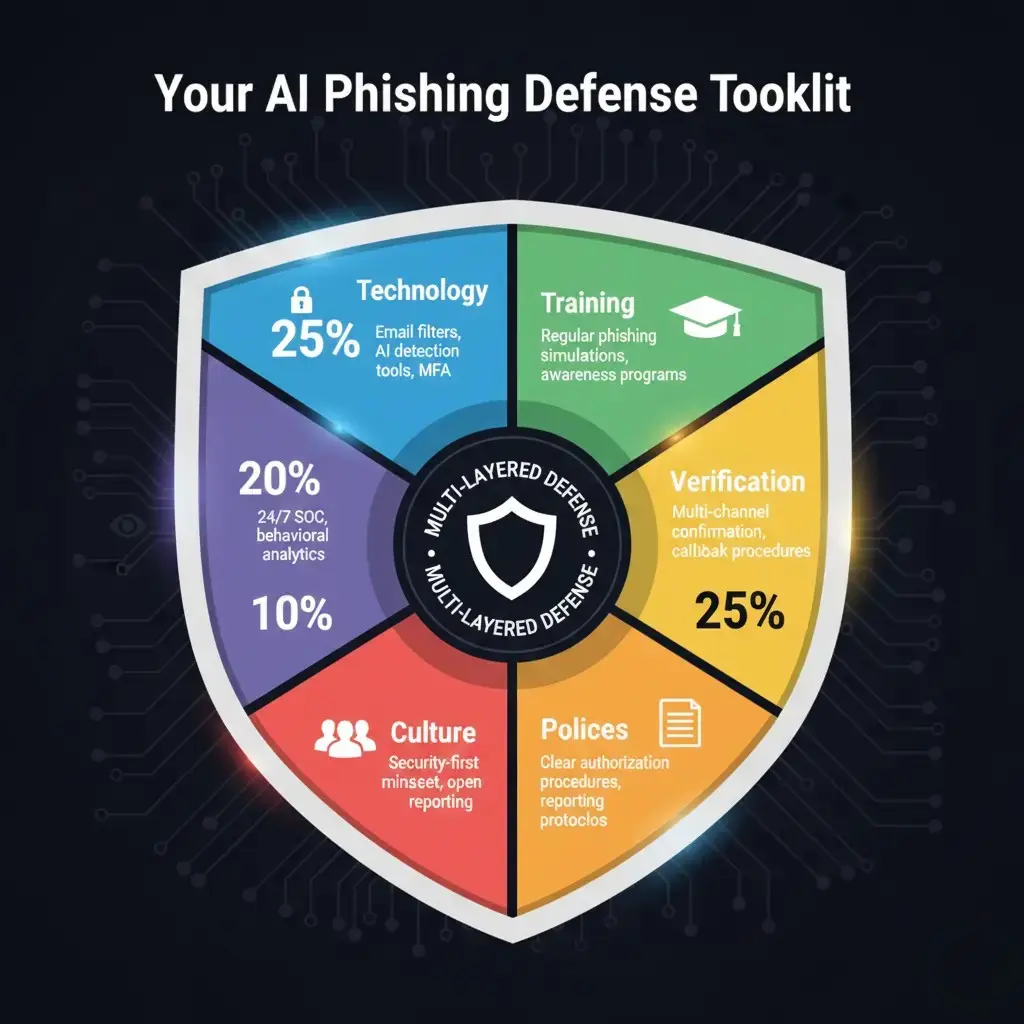
Success requires a layered approach combining advanced technology, comprehensive training, clear policies, continuous monitoring, and organizational culture change. Organizations must invest in both defensive technology and human awareness, recognizing that the best security combines artificial and human intelligence.
The threat will continue to evolve as AI technology advances, requiring ongoing adaptation and vigilance. Organizations that treat cybersecurity as a continuous process rather than a one-time project will be best positioned to defend against emerging threats. Those that fail to adapt face not just financial losses but potential business failure as attacks become more damaging and frequent. Mastering operating system security provides an additional foundation for comprehensive protection.
The AI revolution has given cybercriminals powerful new tools, but it has also provided defenders with enhanced capabilities. By understanding these threats, implementing appropriate defenses, and maintaining constant vigilance, organizations and individuals can significantly reduce their risk of falling victim to AI-powered phishing attacks. The challenge is serious, but with informed action and sustained commitment, we can navigate this new landscape safely.
In the end, security in the age of AI phishing comes down to a simple principle: trust, but verify. Question the unusual, confirm the unexpected, and never let urgency override good judgment. By embracing these practices and the strategies outlined in this guide, you can protect yourself, your organization, and your digital assets from even the most sophisticated AI-powered threats.